
When is the German IFO survey and how it could affect EUR/USD?
The German IFO Business Survey Overview
The German IFO survey for March is due for release later today at 0900 GMT. The headline IFO Business Climate Index is seen higher at 93.2 versus 92.4 previous.
The Current Assessment sub-index is expected to rise to 91.3 this month vs. 90.6 prior while the IFO Expectations Index – indicating firms’ projections for the next six months – is likely to arrive at 95.2 in the reported month vs. 94.2 last.
Deviation impact on EUR/USD
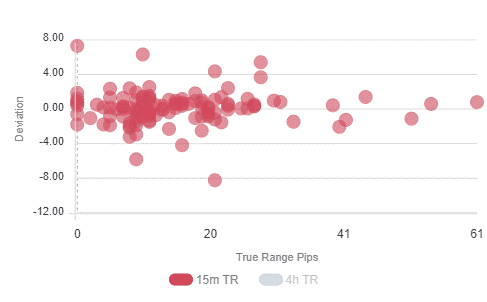
Readers can find FX Street's proprietary deviation impact map of the event below. As observed the reaction is likely to remain confined between 3 and 30 pips in deviations up to 3.0 to -4.2, although in some cases, if notable enough, a deviation can fuel movements of up to 60 pips.
How could affect EUR/USD?
The macroeconomic divergence between the US and the Eurozone continues to underpin the US dollar, limiting the recovery attempts in EUR/USD below the 1.1800 level. Ahead of the German data, the spot trades 0.15% higher at 1.1782, at the time of writing.
The spot faces immediate resistance at 1.1800 (round figure), above which the 5-DMA at 1.1828 could be on the buyers’ radar on a big beat. Further up, the 1.1850 psychological level could get tested, Alternatively, disappointing data could reinforce the downside momentum, with a test of four-month lows at 1.1761 likely on the cards. If the selling pressure intensifies then $1700 could be put at risk.
Key notes
Chart of the day: EUR/USD
EUR/USD risks extra losses near-term – UOB
Forex Today: Dollar takes a breather amid mixed virus news, ahead of US data
About the German IFO Business Climate
This German business sentiment index released by the CESifo Group is closely watched as an early indicator of current conditions and business expectations in Germany. The Institute surveys more than 7,000 enterprises on their assessment of the business situation and their short-term planning. The positive economic growth anticipates bullish movements for the EUR, while a low reading is seen as negative (or bearish).